U.S. States With the Lowest and Highest Property Tax Rates
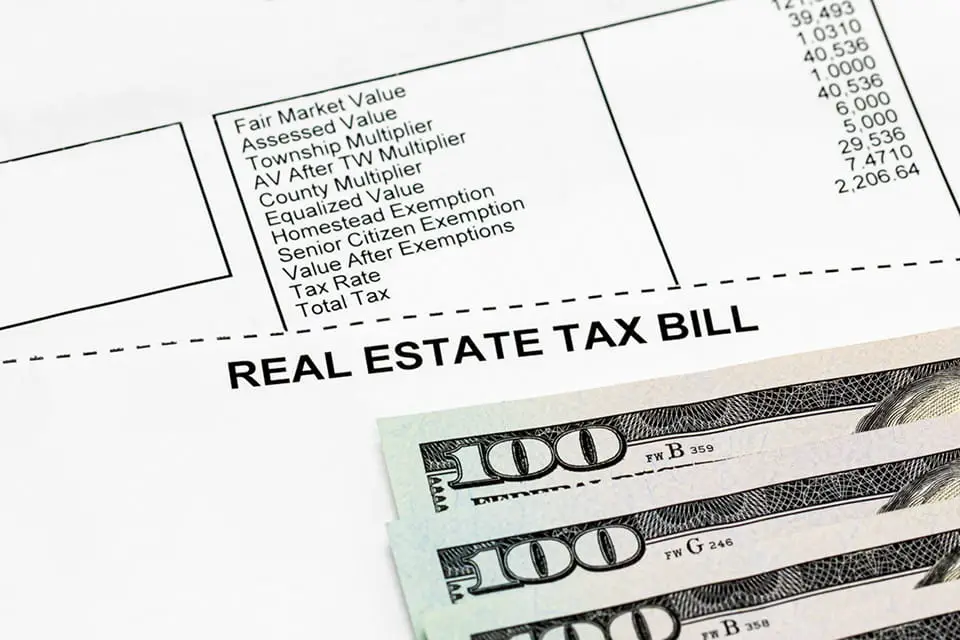
Property taxes are among the most important, and sometimes overlooked, costs of owning a home in the United States. Because property taxes are set at the state and local level, the amount homeowners pay can vary drastically from one area to another. This means two homes with the same market value can carry very different yearly tax bills depending on the state, county, or even the school district they're in.
Understanding how property taxes work, why rates differ, and what these differences mean for long-term affordability is essential for homeowners, buyers, and real estate investors alike.
What Are Property Taxes and How Do They Work?
Property taxes are local taxes charged on real estate, such as houses, land, and commercial buildings. Counties, cities, school districts, and other local agencies collect property taxes to fund community services, including public schools, police and fire departments, roads, libraries, and parks.
Homeowners typically receive an annual or semi-annual tax bill based on the assessed value, and payments are usually required regardless of mortgage status. Some homeowners pay property taxes directly, while others pay them through a mortgage escrow account.
How Are Property Tax Rates Measured?
Property taxes are calculated using a combination of your property's assessed value and the local tax rate, usually expressed as a mill rate or millage rate.
Assessed Value vs. Market Value
- Market Value: The price your home could sell for on the open market.
- Assessed Value: The value the local tax assessor assigns to your property for tax purposes. It may be a percentage of the market value, depending on state or local rules. For example, a state may assess homes at 80% of market value.
Mill Rate
The mill rate represents the tax paid per $1,000 of assessed value. One mill equals $1 in tax for every $1,000 of assessed property value. Local governments set mill rates to fund schools, public safety, and other services.
For example, if a home's market value is $300,000 and assessed at 80% with a local mill rate of 20 mills (or $20 per $1,000), the annual property tax rate would be:
- Property assessed at 80%: $300,000 * 0.8 = $240,000
- 240,000 ÷ 1,000 = 240
- The annual property tax would be: 240 * $20 = $4,800
- Homeowners owe $4,800 in property taxes per year.
High and low tax rates affect buyers and homeowners. High tax rates increase the ongoing cost of homeownership, which can impact affordability for buyers and reduce net returns for investors. While low tax rates can make property ownership more affordable and attractive, they can also signal fewer local services or infrastructure funding.
Do All U.S. States Have Property Taxes?
Yes. All U.S. states have property taxes, but the way they are structured and collected varies widely. Each state sets the legal framework for property taxes, which are usually administered at the local level. Therefore, no state eliminates property taxes because they are a primary source of funding for local services and municipal infrastructure.
Some states known for relatively low property tax burdens rely more on other revenue sources, such as income taxes, sales taxes, or tourism-related taxes, to fund public services. This implies that while some states have much lower effective property tax rates, every homeowner in the U.S. pays some form of property tax.
Is There Any State With No Property Tax at All?
No. There is no U.S. state with no property taxes. Even states with reputations for low taxes, like Alabama and Louisiana, still charge property taxes at the county or municipal level. This is because public services cannot operate without stable revenue. Therefore, eliminating property taxes is not considered workable in any state.
What does vary is how much property owners pay. Some states have very low effective property tax rates, while others have significantly higher rates. A few states also offer special programs, such as tax freezes or large tax exemptions for seniors, veterans, or primary residences, which can lower the tax burden for some homeowners.
Therefore, every homeowner, regardless of location, pays some form of property tax. For buyers and investors, this means that although taxes vary widely, no state eliminates them, and local rates should always be reviewed before purchasing real estate.
States With the Highest Property Tax Rates
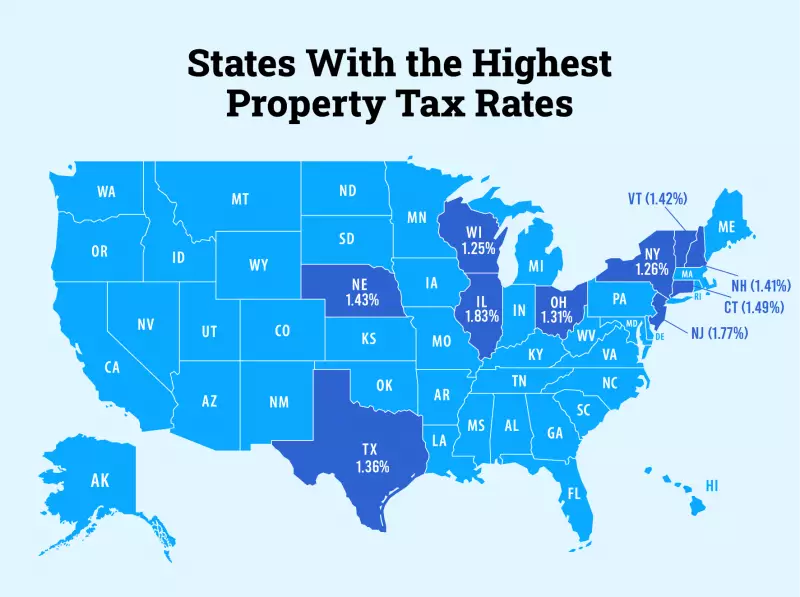
Based on the most recent data from the Tax Foundation, here are some of the states with the highest property tax rates in the United States:
| State | Effective Property Tax Rate | What's Driving High Taxes |
|---|---|---|
|
Illinois |
1.83% |
|
|
New Jersey |
1.77% |
|
|
Connecticut |
1.49% |
|
|
Nebraska |
1.43% |
|
|
Vermont |
1.42% |
|
|
New Hampshire |
1.41% |
|
|
Texas |
1.36% |
|
|
Ohio |
1.31% |
|
|
New York |
1.26% |
|
|
Wisconsin |
1.25% |
|
States With the Lowest Property Tax Rates
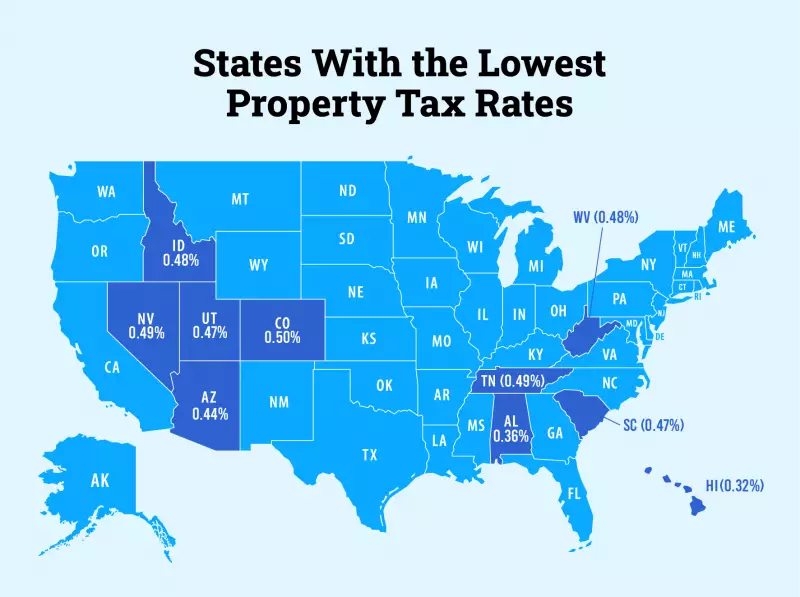
On the contrary, some states impose the lowest property tax rates on homeowners, buyers, and real estate investors. Based on the latest effective tax rate data, here are the states with the lowest property tax rates:
| State | Effective Property Tax Rate | Why the Rates are Low |
|---|---|---|
|
Hawaii |
0.32% |
|
|
Alabama |
0.36% |
|
|
Arizona |
0.44% |
|
|
South Carolina |
0.47% |
|
|
Utah |
0.47% |
|
|
West Virginia |
0.48% |
|
|
Idaho |
0.48% |
|
|
Tennessee |
0.49% |
|
|
Nevada |
0.49% |
|
|
Colorado |
0.50% |
|
Why Property Tax Rates Vary So Much by State
Several factors explain why tax rates differ dramatically across states in the United States.
- State and Local Funding Structure: Some states rely heavily on property taxes to fund schools, police, fire departments, and other local services. Others use income taxes, sales taxes, or special fees to cover most costs, which allows them to keep property tax rates lower.
- Home Values and Assessment Practices: Property taxes are calculated based on assessed value. States may determine homes at a percentage of market value or update assessments more or less frequently. High-value areas can produce higher returns even with a moderate rate, while lower-value regions may have lower tax burdens.
- Number of Taxing Authorities: In some states, multiple overlapping jurisdictions, counties, cities, school districts, and special districts each levy property taxes. The combined rate can be much higher than in states with fewer taxing bodies.
- Local Spending Needs: Communities with high demand for education, infrastructure, or municipal services typically need higher property taxes to cover budgets. Wealthier communities may levy higher taxes to maintain amenities and public services in high-demand areas.
- State Laws and Limits: Some states impose caps on property tax rates, limits on annual increases, or exemptions for seniors, veterans, or primary residences. These rules can significantly affect effective tax rates across states.
- Alternative Revenue Sources: States with robust sales, income, or tourism taxes may rely less on property taxes, keeping rates low. Conversely, states with limited alternative revenue streams typically make up the difference through higher property taxes.
How to Look Up Property Tax Rates for a Specific Area

Here is a guide for homeowners, buyers, and investors to look up property tax rates for different areas across the United States.
- Check the Local Assessor's Website: Most counties and municipalities maintain an online property tax portal. You can usually search by address or parcel number to see the property's assessed value, current tax rate, and annual tax bill.
- Visit the County or City Tax Collector's Office: If online resources are limited, you can contact the local tax collector or assessor in person or by phone. Staff can provide detailed information about rates, exemptions, and billing schedules.
- Use State or Local Databases: Some states provide centralized property tax databases that allow you to compare rates across counties. These are particularly helpful for investors or buyers evaluating multiple locations.
- Look at Recent Tax Bills: If you have access to the current or prior owner's property tax bills, these documents provide the most accurate picture of what a homeowner actually pays each year.
- Consider Local Mill Rates and Special Districts: Your property tax typically combines multiple rates: city, county, school district, and sometimes special districts, such as libraries or fire protection. Be sure to check all applicable levies to calculate the full property tax burden.
- Use Online Third-Party Tools for Estimates: Third-party platforms typically include property tax estimates. These databases aggregate information from public sources to provide a convenient web tool to look up property tax rates. However, always verify information from these sites with official sources.
Property tax rates in the U.S. differ widely from state to state, with some states, such as New Jersey and Illinois, carrying the highest effective rates. In contrast, others, such as Hawaii, Alabama, and Idaho, remain among the lowest. These differences reflect a combination of local funding needs, home values, assessment practices, and alternative revenue sources.
For homeowners, buyers, and investors, understanding these variations is crucial: high-tax states may provide extensive public services but increase ongoing costs. On the other hand, low-tax states can make homeownership more affordable and improve investment returns. Comparing effective rates alongside home prices helps individuals make informed decisions and plan for the true long-term cost of owning property.
Frequently Asked Questions (FAQ)
Which U.S. state has the highest property tax rate?
Which U.S. state has the lowest property tax rate?
Is there any U.S. state with no property tax?
Why do property tax rates vary so much between states?
How can I find the exact property tax rate for a specific home or county?

Martta Weiss is a property research specialist focused on improving transparency and access to U.S. real estate records. Her work centers on ownership history, recorded transfers, foreclosure activity, lien filings, and long-term market shifts, transforming complex public data into clear, actionable insights.
At PropertyRecords.com, Martta analyzes county and state property datasets to create research-driven content that helps investors, real estate professionals, homeowners, and everyday buyers better understand recorded property history and ownership trends nationwide.