Mortgage Rate Predictions for 2026
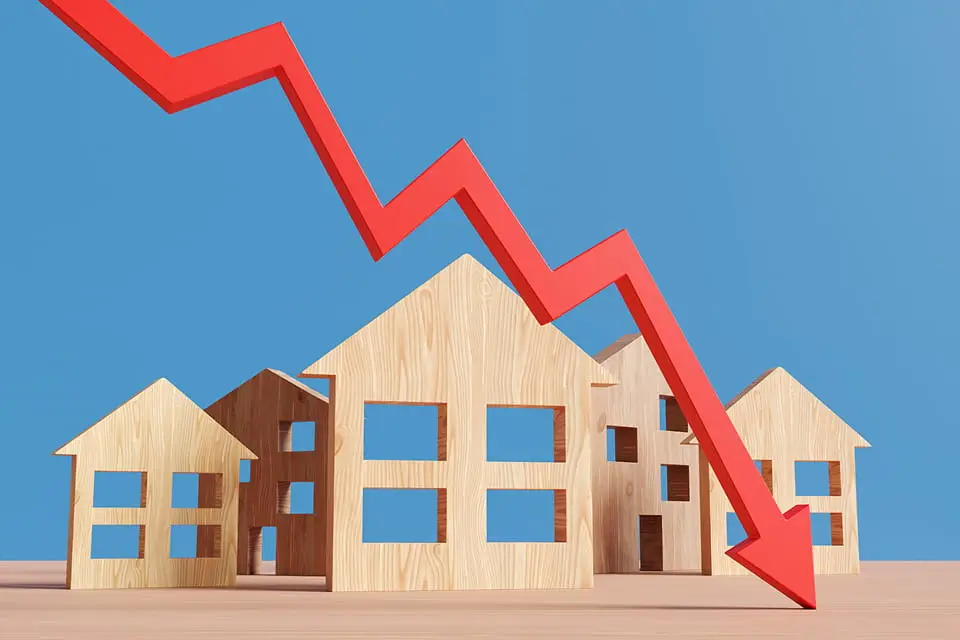
Mortgage rates in the United States have moved through dramatic cycles in recent years. After falling to historic lows during the pandemic due to aggressive monetary easing and economic uncertainty, rates rose sharply beginning in 2022 as inflation climbed and the Federal Reserve tightened policy. By 2024 and 2025, borrowing costs began to stabilize, though they remained well above their pandemic-era levels.
Recent volatility in mortgage rates has brought them to the forefront of real estate discussions. With rapid swings and uncertainty about what lies ahead, especially as we head into 2026, all stakeholders in the real estate market are watching rates closely. Even small changes in mortgage rates can significantly affect monthly payments and overall affordability, making them a key factor in today's housing market.
How Mortgage Rates Are Determined
Mortgage rates represent the cost of borrowing money to buy a home and are influenced by a mix of economic and market factors. At their core, rates reflect the risk lenders take and the overall cost of funds. When lenders perceive higher inflation, stronger economic growth, or increased risk, they typically charge higher rates to protect their returns. Conversely, slower growth or low inflation can result in lower rates.
Several key factors shape mortgage rates:
- Federal Reserve Policy: The Federal Reserve influences short-term interest rates and overall monetary conditions. While the Fed does not set mortgage rates directly, its policy decisions on short-term interest rates and bond purchases influence long-term borrowing costs.
- Bond Market Activity: Mortgage rates usually move in tandem with yields on U.S. Treasury bonds, especially the 10-year Treasury, which serves as a benchmark for long-term loans.
- Inflation Expectations: Inflation expectations affect the interest lenders charge. Higher anticipated inflation erodes the value of fixed-rate payments over time, prompting lenders to charge higher rates. Conversely, lower inflation expectations can lead to lower mortgage rates.
- Economic Growth and Employment: Strong job growth or higher consumer spending can signal a robust economy, usually leading to higher rates. In contrast, slower growth can put downward pressure on borrowing costs.
- Housing Market Conditions and Demand for Mortgages: The balance of housing supply and buyer demand indirectly affects rates. In tight markets with high demand, lenders may charge slightly higher rates because the risk of default is lower and buyers compete for financing. In slower markets, rates are more favorable, making it easier to attract borrowers.
- Credit Risk and Lending Conditions: Individual borrower risk factors, such as credit score, down payment, and loan type, also determine the rate offered to a specific borrower. On a broader scale, market conditions, lender competition, and capital availability can influence average mortgage rates across the country.
Expert Forecasts: Where Could Mortgage Rates Be in 2026?
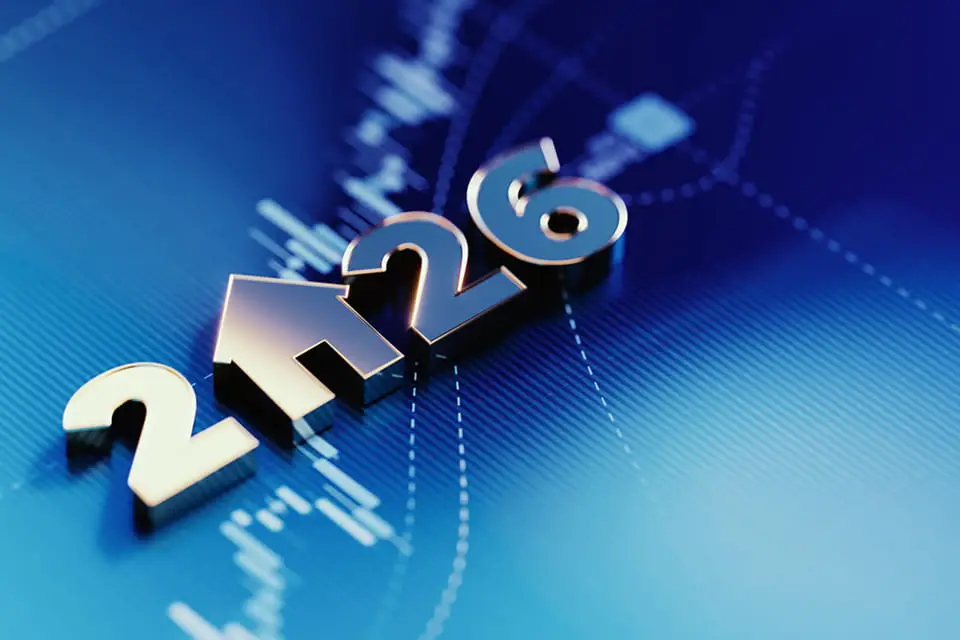
Most major housing and economic forecasters expect U.S. mortgage rates to ease slightly by 2026, but not to return to the unusually low levels seen during the pandemic. While no one can pinpoint a specific number for 2026, most expert predictions fall within a fairly narrow range.
Several reputable organizations regularly publish mortgage rate outlooks, and their projections for 2026 are as follows:
- Fannie Mae projects that 30-year fixed mortgage rates could ease to below 6% by the end of 2026. Their outlook assumes that inflation continues to slow and long-term interest rates gradually settle.
- The Mortgage Bankers Association (MBA) expects a slightly higher path, estimating rates near mid 6% by the end of 2026. Their forecast reflects cautious assumptions about inflation progress and financial market uncertainty.
- Independent analysts, including well-known mortgage market commentator Barry Habib, point to the possibility of rates dipping into the 5.5% to 5.75% range if economic conditions align favorably, particularly if inflation cools faster than expected or if bond yields fall more sharply.
Overall, the shared view is that 2026 rates will likely settle within a relatively narrow band, somewhere in the mid-5s to mid-6s.
However, while expert forecasts provide useful context for predicting future mortgage rates, it should be understood that they are estimates and not absolutes. A projected rate of "around 6%" reflects current economic assumptions and could adjust as new data emerges. These projections also do not indicate whether a mortgage is affordable or whether someone should buy, sell, or refinance, as these decisions depend on individual circumstances, housing costs, and local market conditions.
Will Mortgage Rates Go Down, Stay Flat, or Rise in 2026?
Because mortgage rates depend on constantly changing economic conditions, analysts typically describe possible scenarios rather than make firm predictions. For 2026, most outlooks fall into three broad possibilities: rates gradually decline, remain close to current levels, or rise again if economic pressures return.
Scenario 1: Rates Gradually Decline
In this scenario, mortgage rates slowly ease into the mid-5% to low 6% range, aligning with many major forecasts. A few key conditions would support a downward trend:
- Inflation continues cooling toward the Federal Reserve's 2% goal, reducing pressure on long-term interest rates.
- The job market moderates, showing slower hiring and wage growth without entering a severe downturn.
- The Federal Reserve gradually cuts short-term interest rates, signaling confidence that inflation is contained.
- Global markets remain stable, with steady demand for U.S. Treasury bonds, helping push yields lower.
Scenario 2: Rates Stay Roughly Flat
Here, mortgage rates hover around their current range, roughly the mid-6% levels, throughout 2026. This could happen if economic data improves only incrementally, causing lenders and investors to hold steady rather than make a big adjustment. Conditions associated with a flat trajectory could include:
- Inflation slows but remains somewhat sticky, slightly above the Fed's preferred range.
- The labor market remains sturdy, limiting downward pressure on interest rates.
- The Federal Reserve makes only small policy changes, keeping financial markets cautious.
- Mixed global signals, including uncertainty in foreign economies or fluctuating Treasury demand.
Scenario 3: Rates Tick Higher Again
Under this scenario, rates could edge back towards, or slightly above, recent highs, say the upper-6% range or higher. This outcome might emerge if:
- Inflation rebounds, possibly due to strong consumer demand, supply disruptions, or higher energy prices.
- The job market accelerates, leading to higher wages and renewed inflation pressure.
- The Federal Reserve pauses or reverses planned rate cuts, shifting to a more restrictive stance.
- Global events, such as geopolitical tensions, financial volatility, or weak foreign demand for U.S. bonds, push Treasury yields upwards.
How 2026 Compares to Past Mortgage Rate Cycles
Mortgage rates have fluctuated widely over the past several decades, reflecting shifts in inflation, economic growth, and Federal Reserve policy.
According to Bankrate, during the early 1980s, the U.S. experienced historically high rates, with 30-year fixed mortgages exceeding 16% at their peak. Rates gradually declined over the following decades, reaching long-term averages in the 5-8% range through much of the 1990s and 2000s.
In the 2010s, rates were further reduced, often staying below 5% as the economy recovered from the financial crisis.
In the pandemic years of 2020-2021, rates fell to historic lows, with the 30-year fixed mortgage dipping below 3%. These record-low rates were driven by the Federal Reserve's emergency rate cuts and large-scale bond purchases aimed at stabilizing the economy. For many buyers, this period represented an unprecedented opportunity to secure super cheap financing.
In contrast, the post-pandemic period of 2022-2023 saw a rapid surge in rates, rising above 7% at some point. Rising inflation, aggressive Federal Reserve rate hikes, and robust economic growth drove borrowing costs sharply higher. This sudden jump led to reduced affordability and a slowdown in home-buying activity.
By 2024-2025, mortgage rates began to stabilize in the mid-6% range, reflecting moderation in inflation, slower Fed tightening, and broader economic adjustments. Although higher than pandemic-era lows, these rates were below the peak levels seen in 2022-2023.
Looking ahead, the forecast for 2026 suggests rates could move slightly lower or remain roughly flat, likely settling in the mid-5% to mid-6% range, placing them above the historic pandemic-era lows but below the peaks of 2022-2023. In this context, 2026 rates would align more closely with long-term historic norms.
What Changing Rates Could Mean for Monthly Payments
Even a little change in mortgage rates can noticeably affect monthly payments, particularly for typical home loan amounts. To illustrate, consider a $400,000 30-year fixed mortgage, a common benchmark for many U.S. buyers, and assume it's fully amortizing, meaning the loan is paid off in equal monthly installments over 30 years.
- At a 6% interest rate, the monthly principal and interest payment would be around $2,398.
- If the rate drops to 5.5%, the same loan would see monthly payments fall to about $2,271, a difference of $127 per month.
- Conversely, if rates rise to 6.5%, the monthly payment increases to approximately $2,529. This is about $131 more per month than in the 6% scenario.
Rates influence monthly payments. These examples reveal that even a 0.5% change in mortgage rates can impact monthly payments by several hundred dollars annually, potentially affecting household budgeting and affordability decisions.
Current forecasts suggest that mortgage rates in 2026 are likely to remain near current levels or decline modestly, generally settling in the mid-5% to mid-6% range. While these rates are lower than the recent post-pandemic peaks, they remain well above the historic lows seen during 2020-2021.
It is crucial to remember that forecasts are estimates, not guarantees. Unexpected developments, such as shifts in inflation, changes in Federal Reserve policy, global economic events, or sudden market volatility, could push rates higher or lower than predicted.
For all stakeholders in the property market, the key takeaway is that 2026 is expected to be a period of relative stability in borrowing costs compared with recent volatile years; still, the exact path will depend on how economic and policy conditions evolve.
Frequently Asked Questions (FAQ)
What are experts predicting for mortgage rates in 2026?
Will mortgage rates go down in 2026 or stay high?
Could mortgage rates rise again in 2026?
How do mortgage rates in 2026 compare to historical averages?
How much does a small change in mortgage rates affect monthly payments?

Martta Weiss is a property research specialist focused on improving transparency and access to U.S. real estate records. Her work centers on ownership history, recorded transfers, foreclosure activity, lien filings, and long-term market shifts, transforming complex public data into clear, actionable insights.
At PropertyRecords.com, Martta analyzes county and state property datasets to create research-driven content that helps investors, real estate professionals, homeowners, and everyday buyers better understand recorded property history and ownership trends nationwide.